Identify the point, time, trend and measurement quality; check the other sensors in the zone.
CRITICAL INFRASTRUCTURE · DATA CENTERS
Reliable measurements. Informed operation.
Track energy, cooling and technical events, according to the site’s metering plan and interfaces. Critical systems keep their functions and priorities.
Explore the needs ↓
01MEASURE THE RIGHT FLOWS
From the site to the distribution and the racks.
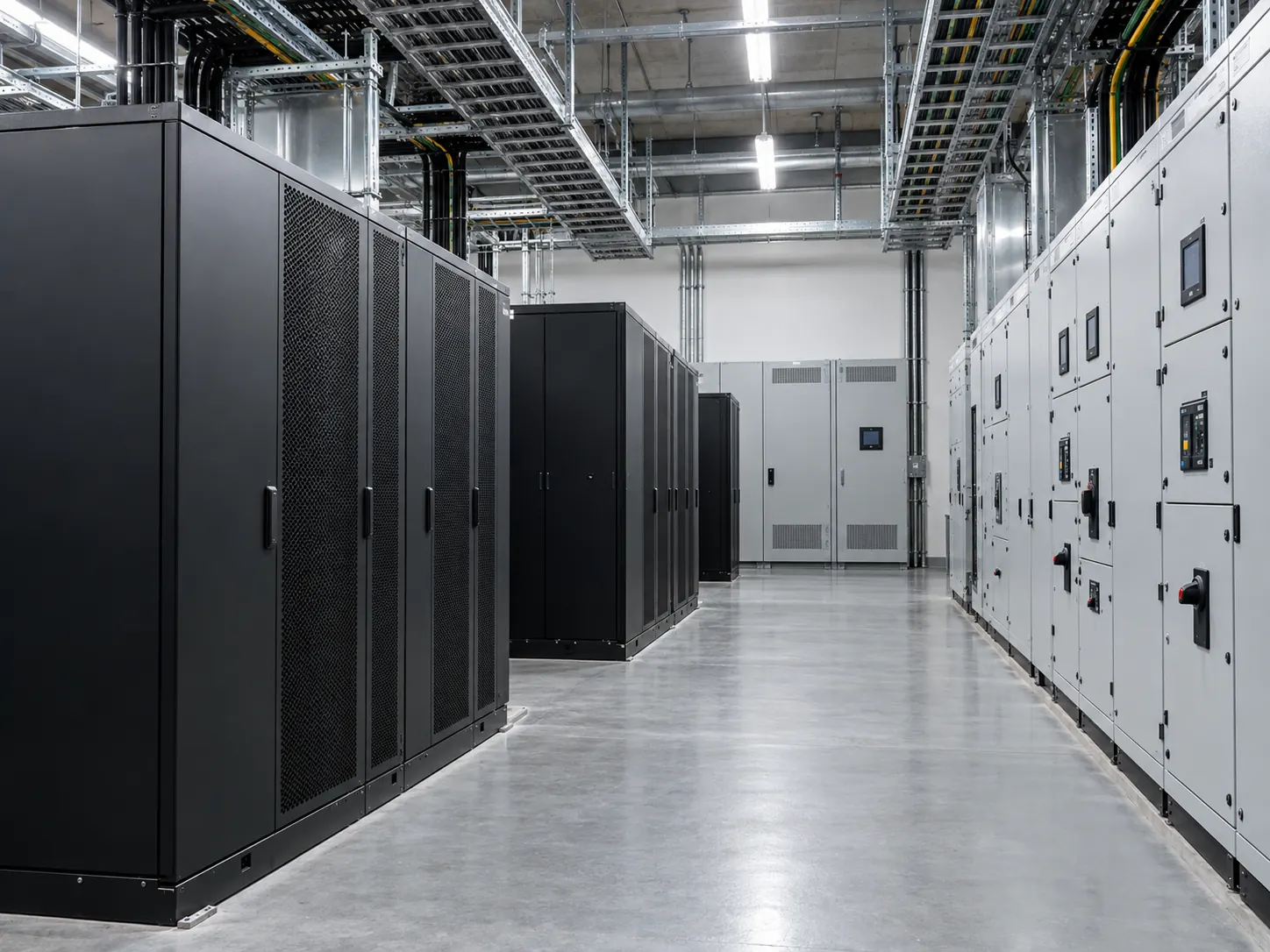
Define the main metering, the feeders, the auxiliary uses and the IT points that are actually accessible.
- Power in kW and cumulative energy in kWh at the equipped points
- Measurement by room, distribution or rack if instrumentation is available
- Accessible statuses and faults of UPS units and distribution
- Identification of sources, paths and metering boundaries
- History, freshness and quality of the data
Rack-level metering is not assumed. An electrical measurement does not directly indicate IT load or computing capacity; the different levels must not be added together without analysis.
02OBSERVE LOCAL CONDITIONS
Temperature, humidity and cooling that are easy to read.
Position the sensors to understand the conditions the equipment actually experiences.
- Equipment air inlet temperatures at the instrumented points
- Relative humidity and other quantities, depending on sensors and method
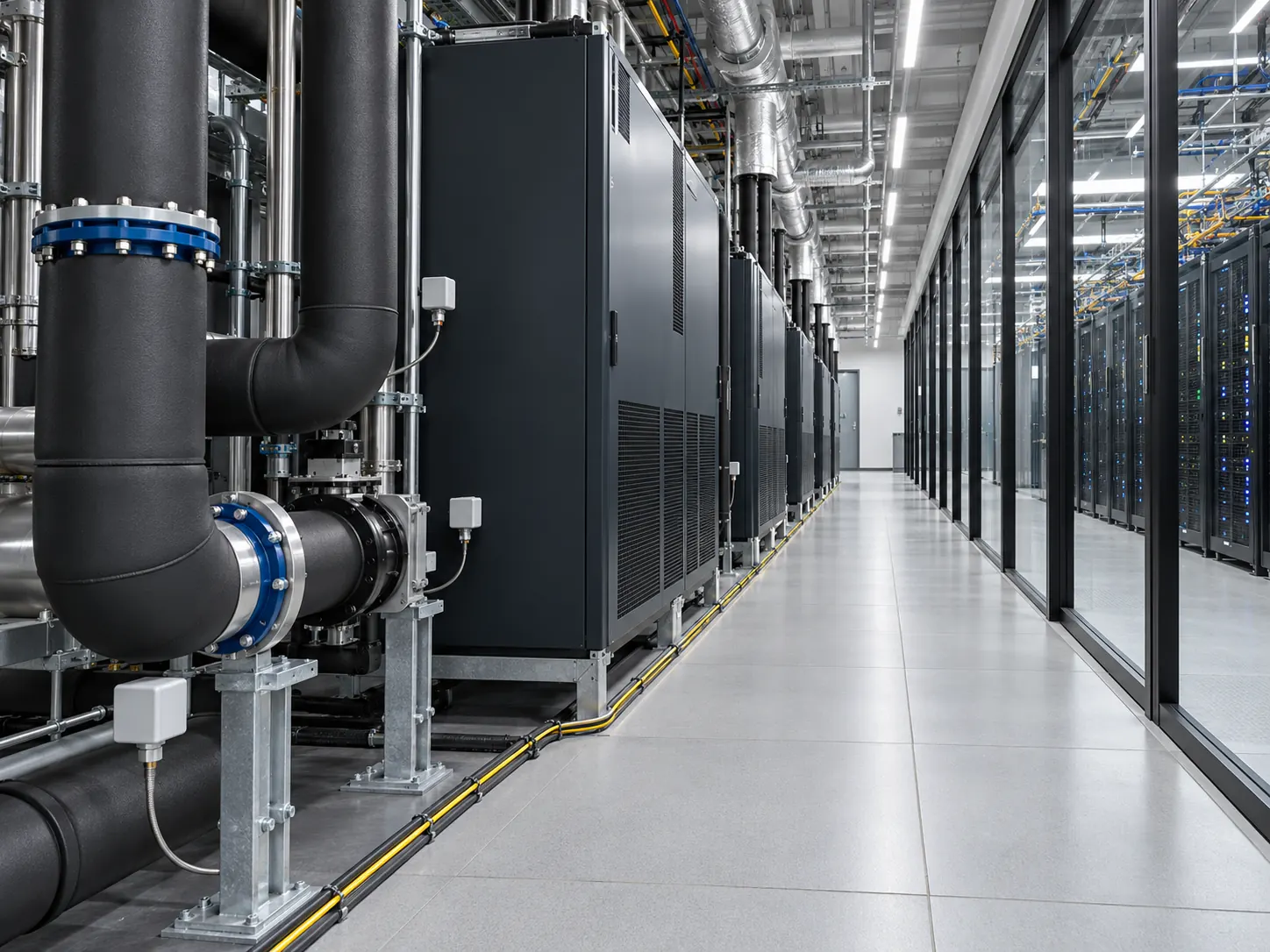
- Statuses and faults of compatible cooling units
- Hydraulic measurements and water detection if installed
- Curves and localized events, with available history
Thresholds and time delays depend on equipment classes, manufacturer recommendations and site rules. A room average does not guarantee the absence of a hot spot. No universal setpoint or cooling command is imposed.
OBSERVATION · QUALIFICATION · INTERVENTION
An event put in context before any action.
Illustrative example: a temperature changes at an instrumented air inlet point.
Examine cooling statuses and recent changes with the operator, without automatic diagnosis.
Apply only the procedures and actions validated by the site managers.
Check the trend after intervention and record the observations; acknowledging is not correcting.
A SCOPE TO DEFINE WITH THE OPERATOR
Look deeper without confusing the functions.
Choose a topic. The features described depend on the instrumentation and interfaces; they are not all simulated in the demo.
Power supply, UPS units and batteries
Report the accessible statuses, load, faults and measurements of UPS units, distribution and backup sources. Identify the A/B paths without adding measurements upstream and downstream of the same flow.
Stated backup times depend on the equipment, the load and the condition of the batteries. No source switching or IT shutdown is assumed; backup tests fall under the site’s procedures and managers.
Water detection and cooling circuits
Locate the detection sensors or cables, identify their zone and report the available events. Depending on instrumentation: water temperature, flow, pressure and pump fault.
A detection triggers the alerts and actions expressly validated. No automatic general shut-off by default: cooling, redundancy and continuity must be taken into account.
PUE: define the scope before the figure
PUE relates the data center’s total energy to the energy of the IT equipment over a common period. Identify the measurement points, boundary, completeness and method before publishing this indicator.
Fictitious example: 1,500 kWh in total and 1,000 kWh for IT give a PUE of 1.5. This is neither a measure of availability nor of IT productivity; a ratio of instantaneous power values does not replace an energy balance over a period.
Interfaces and coexistence with existing tools
Survey references, versions, models and accessible points. Consider BACnet, Modbus, SNMP or API only according to the documented interfaces, licenses and rights actually available.
Technical supervision can complement existing DCIM and IT monitoring tools, without replacing them. Segment access and distinguish reading, acknowledgment and authorized commands with the IT/OT teams.
Multi-site supervision and data quality
Consolidate events and reports by site, room or equipment, with local detail, roles and consistent timestamps. Distinguish a zero value from unavailable or stale data.
Compare only documented scopes, periods and conditions. Plan the behavior when a link is lost, history recovery where possible and the maintenance of local functions.
Maintenance and operating reports
Define reports by room or use, event history, fault tracking and due dates from the available points. Formats and any exports are to be validated with the tool selected.
An acknowledgment record does not prove that a fault has been corrected. Service commitments, maintenance, round-the-clock monitoring and any certification are covered by separate scopes.
PRODUCTION · CONSUMPTION · SMART MANAGEMENT
Producing is not enough to keep consumption under control.
Bring together IT consumption, auxiliaries and any local production, without confusing energy efficiency with availability.
PRODUCE & MEASURE
Measure the balance.
Distinguish grid import, local production, storage and consumption over a consistent period. Document the method before calculating an indicator.
Solar / week12%Self-consumed100%Exported0%
Energy metering & monitoring USE BETTER
Optimize under constraints.
Study only the uses compatible with the thermal needs, the redundancy and the site’s procedures. No IT load is treated as a freely interruptible load.
IT load reducedCooling adjustedSolar surplusAuxiliaries shiftedPower peakLoad shedding outside the IT room
Energy optimization SUPERVISE
Supervise the installations.
Centralize accessible data and events, coordinate only the authorized commands. Local protections and regulation keep priority.
Cooling powerdrift reportedAuthorized commandconfirmed
BMS supervision Production and storage only according to the installation. No backup time, savings, certification or availability is guaranteed by supervision alone.
MEASURE · VALIDATE · ROLL OUT
Our approach, step by step.
- 01SurveyWith you
Distribution diagrams, paths, cooling, sensors and existing tools.
- 02Design3I-DS
Points, units, rights and recipients, with operations and IT/OT.
- 03Supply3I-DS
Meters, rack sensors, gateways and collection unit.
- 04Programming3I-DS
Collection, alarms, efficiency indicators and any links with the DCIM.
- 05Pilot scope3I-DS + you
Reading, alarms, loss of communication and recovery tested without touching production.
- 06Follow-up3I-DS
Documentation, maintenance rules, then extension to the other rooms.
What you receive
- List of monitored points
- Thresholds and alarm rules
- Pilot scope validated
- Test report
- Operating reports
- Configuration file
- Team training
Frequently asked questions
Your questions,
our answers.
Is your question not listed here? Our team will answer and guide you to the right solution.
commercial@3i-ds.comWho carries out the work?
3I-DS designs the solution, supplies the control equipment, programs it, commissions it and provides follow-up. Depending on the project, we can also install this equipment — screens, sensors, gateways — and take charge of the wiring; otherwise, the site’s installers (electrician, refrigeration technician, plumber) carry it out from our drawings, and we coordinate the tests with them.
Which documents should be prepared?
Electrical and hydraulic diagrams, list of equipment and interfaces, sensor layout, available history, validated thresholds, intervention procedures and operations/IT contacts. Do not send access secrets through the contact form.
Does supervision guarantee availability?
No. It makes information accessible within its scope. Electrical architecture, cooling, redundancy, protections, maintenance and continuity procedures require their own studies and tests.
Can the DCIM and IT monitoring be kept?
Their coexistence is studied by specifying data sources, responsibilities and rights. The actual interfaces and licenses determine the possible exchanges.
How are alarms transmitted?
Through the supervision system and, depending on the choices made, by email or SMS, with escalation if the alarm is not acknowledged within the defined time.
Can work be carried out without shutting down the rooms?
In most cases, yes. Sensors and gateways are added while limiting work on equipment in service; installing certain meters may require a planned shutdown, and the tests follow a procedure validated with the operator.
RELATED SOLUTIONS
Link the technical needs to the right tools.
Technical supervision
Statuses, events and integration of the accessible interfaces.
Energy metering
Metering and reports over consistent boundaries.
Cooling & ambient conditions
Local measurements and monitoring of compatible systems.
Water & detection
Detection points and authorized networks, with no shut-off assumed.
YOUR SITE, YOUR CONSTRAINTS